

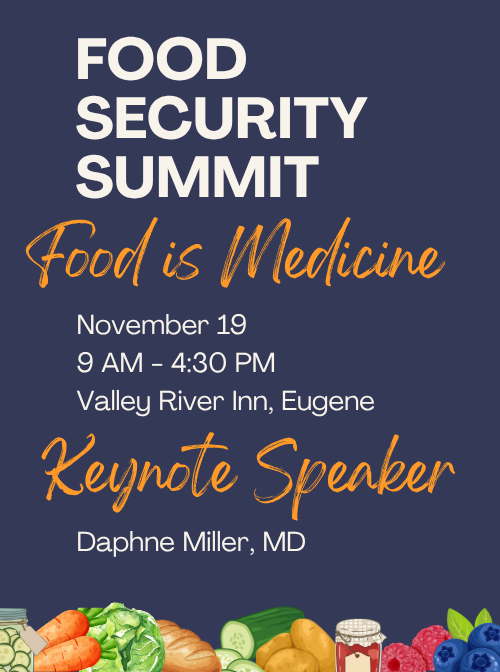

“Food Is Medicine means that food and nutrition can help improve health, and that access to nutritious food is essential for well-being. A broad range of approaches promote optimal health and healing and reduce disease burden by providing nutritious food—with human services, education, and policy change—through collaboration at the nexus of health care and community. ”
FOOD IS MEDICINE
SUMMIT AGENDA
Nov 19 @ VALLEY RIVER INN, EUGENE
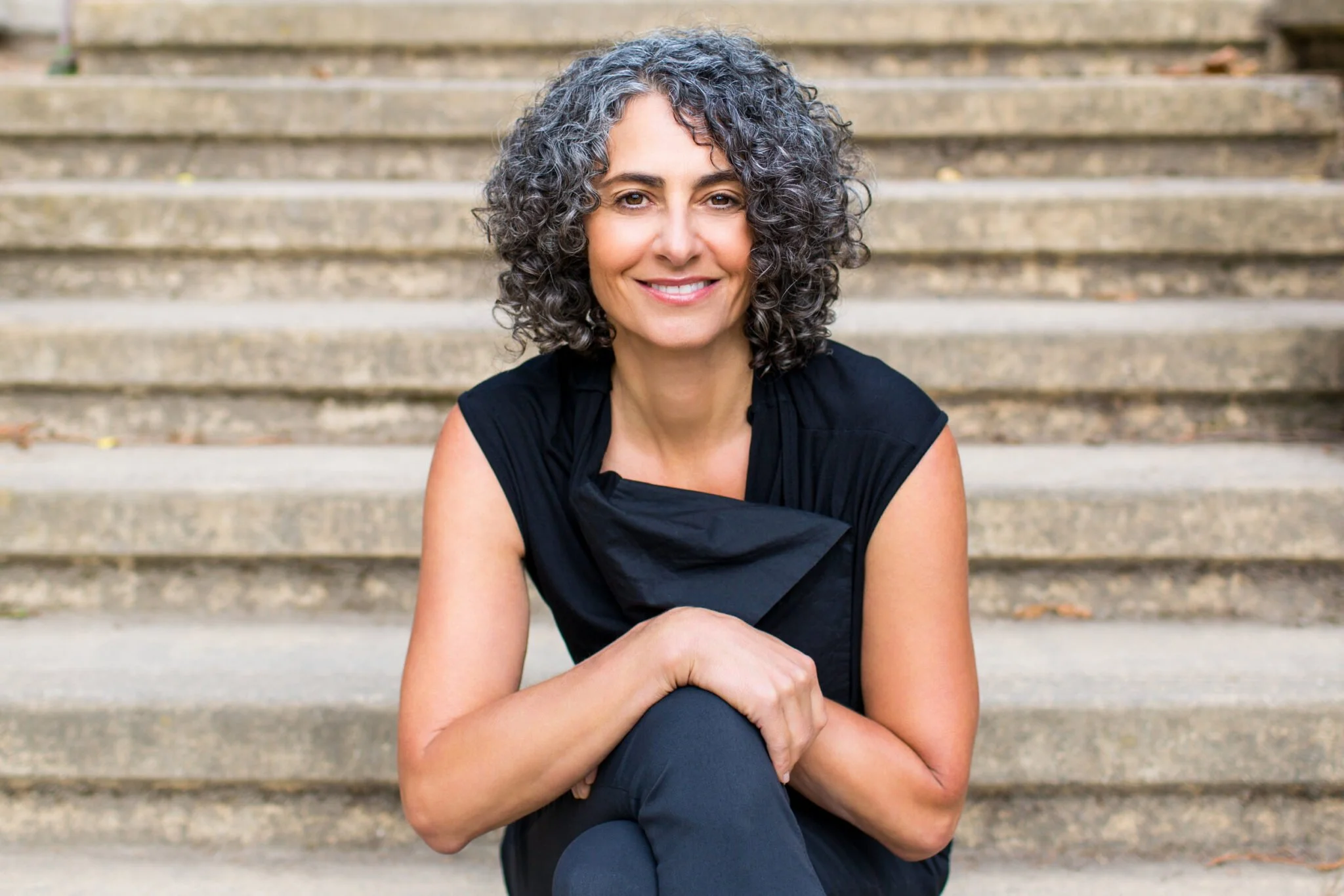
Keynote Speaker
In recognition of this year’s theme, Food is Medicine, we are excited to welcome Daphne Miller, MD, a practicing family physician, science writer, Clinical Professor at UC San Francisco, and Research Scientist at UC Berkeley School of Public Health.
Dr. Miller is Leadership Faculty with the Lifelong Family Medicine Residency Program, where she partners with Urban Tilth, a local farm, to teach doctors-in-training about the connections among food, soil, community, and health. Her work offers a unique perspective on how the health of people, communities, and the land are deeply interconnected.
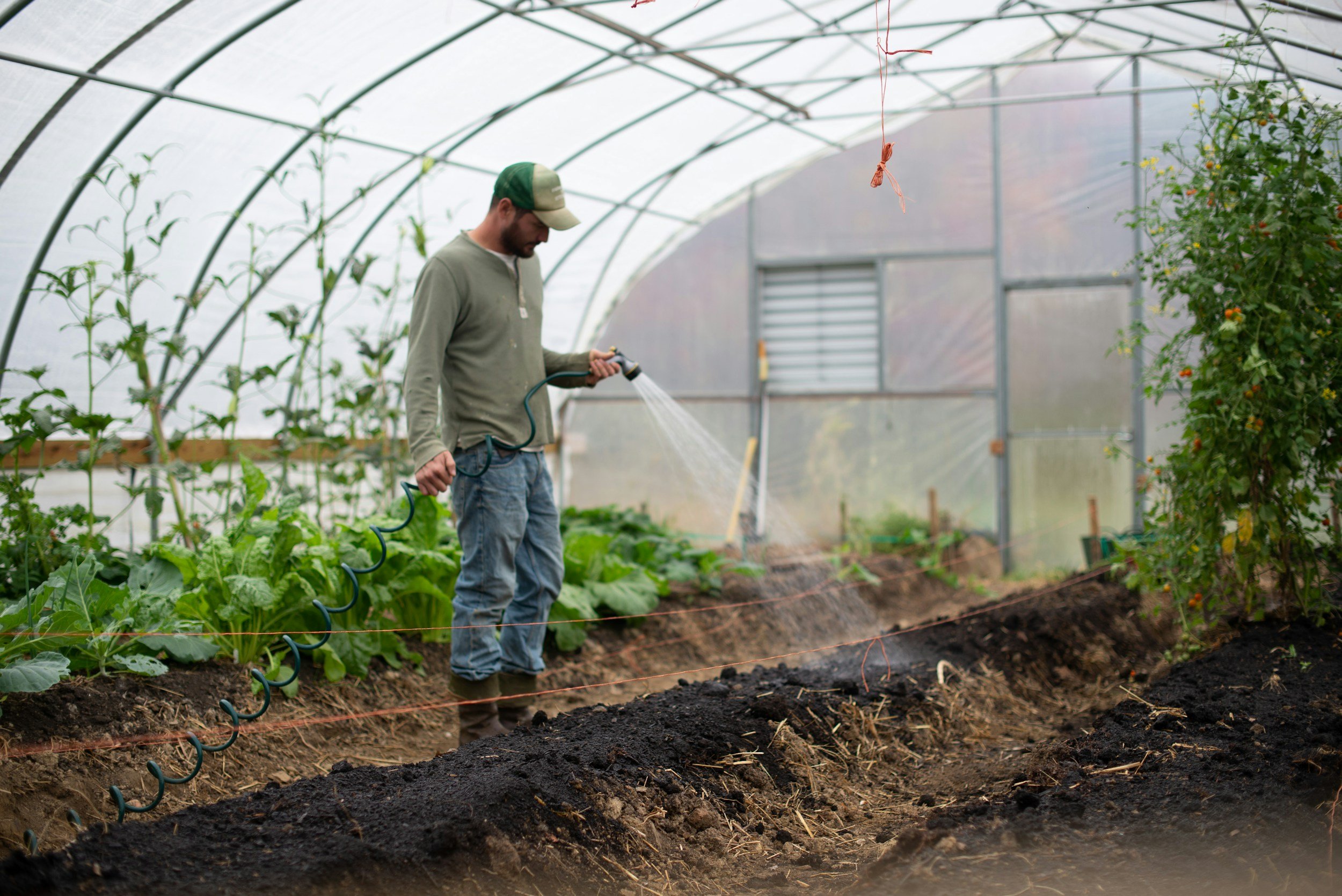
Morning: Breakout Sessions
Choose from three concurrent breakout sessions exploring key issues and opportunities. Sessions will provide opportunities to learn from local partners, share perspectives, and identify opportunities for greater collaboration.
10:30 - 11:45 AM
-
Location: McKenzie Ballroom
Overview: Farmworkers are often hidden from public view, for reasons ranging from rural geography and economic position to immigration status. This session creates space to understand better who the farmworkers of Lane County are, what sectors they work in, what communities they live in, and what concerns, ideas, and needs they carry.
Session Features: A moderated panel with organizers who work directly alongside farmworkers will open the conversation, followed by time for questions from the room. The guiding question throughout: what do farmworkers want the rest of our community to know?
What You Will Learn: Participants will leave with a clearer picture of the people at the foundation of Lane County's food system and a better sense of how to be in relationship with them.
-
Location: Rogue Room
Overview: Lane County already has more food infrastructure than we're using. In this session, producers, processors, distributors, and community partners will map what's happening now and look for ways to build on it, rather than starting from scratch.
What You Will Learn: Together we'll trace the chain from producer to processor to distributor, identify where capacity is going untapped, and explore how existing pieces can connect more effectively.
-
Location: Umpqua Room
Overview: Across Lane County, healthcare and nonprofit partners are finding innovative ways to bring produce and nutrient-rich foods into health promotion and the prevention and treatment of diet-related illness. This panel brings together leaders of several of these efforts to share how their models work, what they're learning, and where they see opportunities to grow.
Session Features: Programs include Produce Plus (Trillium and Food for Lane County), Positive Community Kitchen, the Florence Farmers' Market Veggie Rx program (PeaceHealth), and the State of Oregon's Health-Related Social Needs program.
What You Will Learn: Participants will come away with a clearer understanding of the different types of food and medicine initiatives in Lane County, and a chance to connect directly with the people and organizations leading them.
Food Justice Fireside Chat
The afternoon will begin with a fireside chat exploring food justice and the experiences, challenges, and opportunities shaping equitable access to food across our region.
1:00 - 1:30 PM
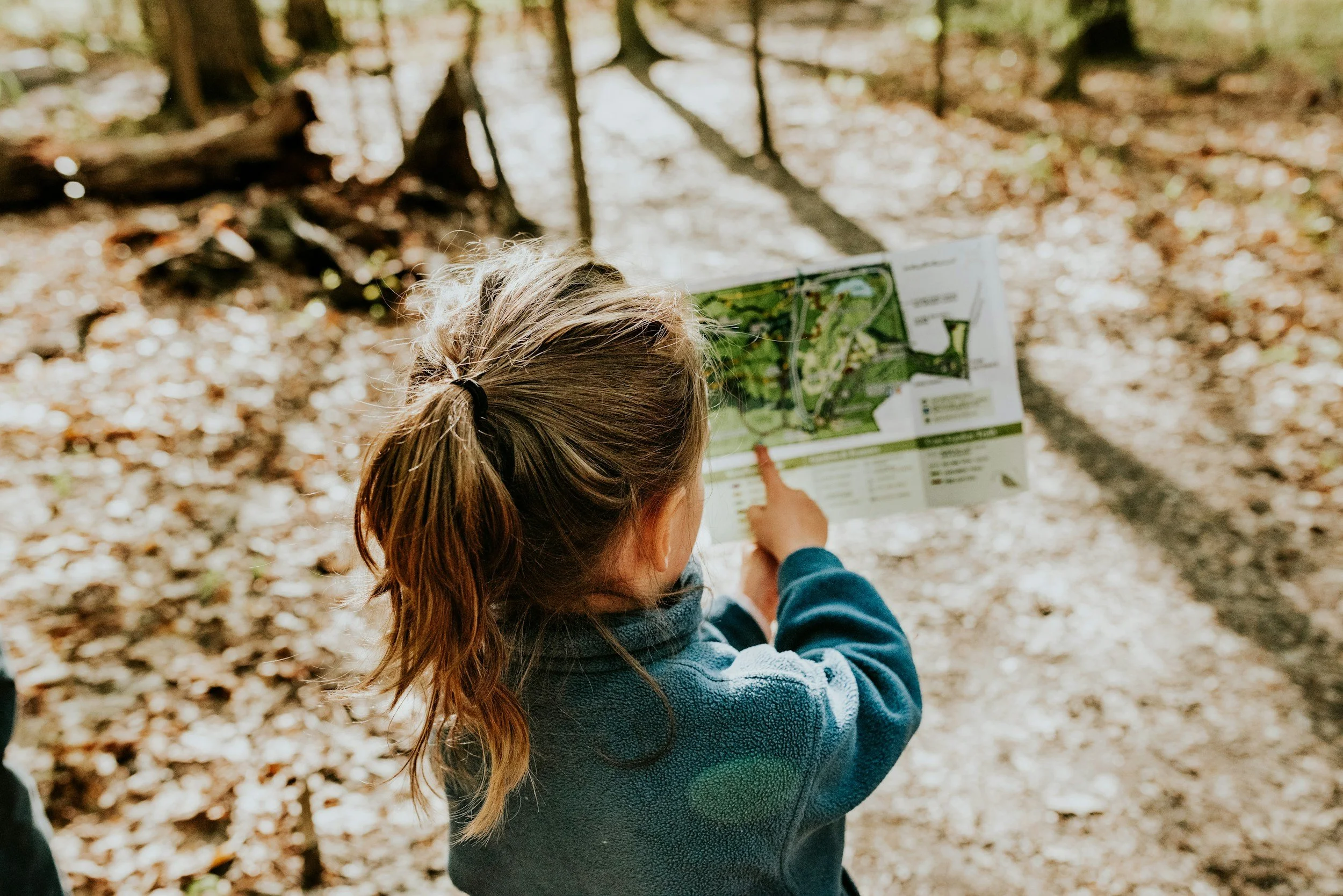
Afternoon: Participatory Mapping
We’ll conclude the Summit with an interactive food systems mapping session. Participants will gather at sector-based tables (farms and producers, transportation, distributors, food vendors, health services, education, housing) to answer questions about their own conditions and pathways: where you live, where you access food, how you travel, and what's missing.
Responses will be plotted onto maps that will populate a Lane County GIS story map — visualizing social conditions, the built environment, travel pathways, and the gaps between them.
Over time, this map will develop as a resource for Grow Lane County workgroups to identify barriers and expand access to food, healthcare, education, and jobs.
1:40 - 3:40 PM
“Come ready to learn, connect, contribute, and help shape the future of our regional food system.”
2025 SUMMIT AGENDA
The 2025 Summit brought together food system stakeholders to build trust, share stories and learn from each other.
Strategic Recommendations
To address these barriers, augment food security and build a more resilient and sustainable local food system, the Grow Lane County Project and the emerging Food Security Coalition are uniquely positioned to support the development and implementation of the following goals
Expand transportation services, food pantry hours, food pantry resources, and the
availability and awareness of other food security resources
• Increase nutrition and cooking education and local producer support
• Foster coordination, collaboration & communication
Support community gardens
Invest in the development of a Food Security Coalition
Develop an online food security dashboard
Barriers to Food Security
Rooted in a diverse set of engagement strategies, including stakeholder interviews, online community feedback surveys, analysis of existing reports and data, and research of food coalitions and councils across Oregon - the Lane County Food Security Assessment identified the following central barriers to local food security.
Limited transportation
Pantry hours and frequency
Nutrition and cooking education
Insufficient infrastructure for local producers
Coordination, collaboration and communication